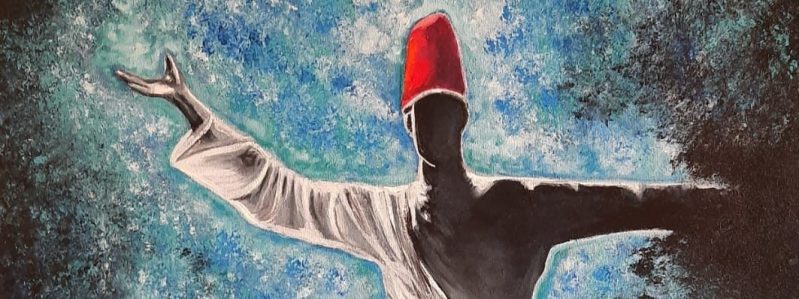
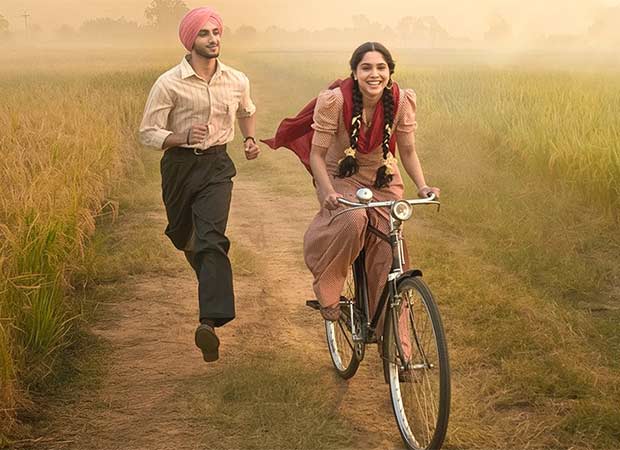
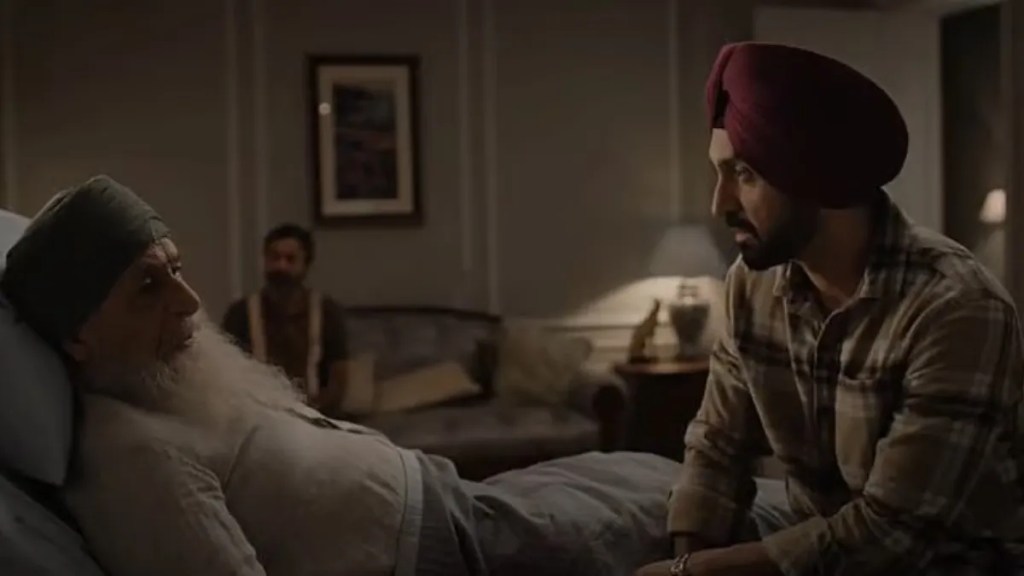
It’s been a week since I watched Imtiaz Ali’s Mein Wapas Aaunga, and the weight of it still hasn’t lifted. I have been listening to “Jaise Tu Hai Paas Mere, Tere Paas Main” on an endless loop. The longing in Naseeruddin Shah’s eyes as Keenu that seems to transcend his physical presence has stayed with me and I decided to write.
Imtiaz Ali movies have a way of making us linger in self-reflection, like after reading a poetry you come back to it to find the unwritten feelings in the spaces between the words.
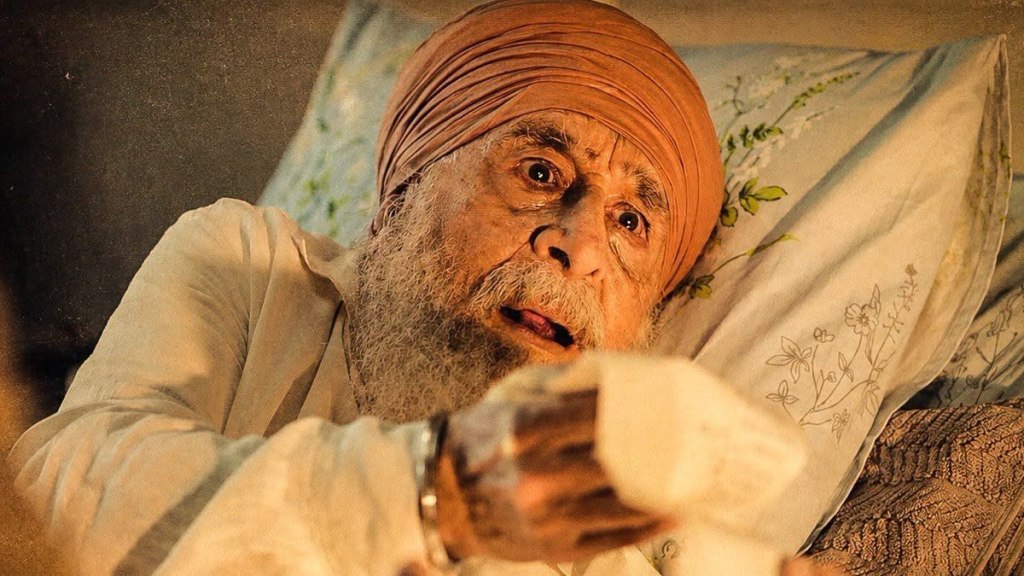
One colleague casually said she watches movies for entertainment so only happy movies qualify . And I asked myself – Soph, why do you do this to yourself ? Why Imtiaz Ali? Probably, I gravitate toward Imtiaz Ali’s work because his films lets you enter a space within yourself a little crack from where the light passes in.
When you curate your life to shield yourself from the sharp edges of sorrow, you unknowingly have also numbed your capacity for deep, resonant joy.
This shielding instinct is perhaps why we remain so detached from history. The India-Pakistan Partition of 1947 is the backdrop of Keenu’s story. We know the statistics of partition : The largest mass migration in history, uprooting over 18 million people. But when humans become numbers, the reality doesn’t cut through. It remains “general awareness”, facts we memorize for exams or cite in political debates to sound intelligent.
That is awareness just floating at the intelligence layer. If it had ever connected deeper we humans would have avoided the wars and forced migrations which till today continues.
To turn that cold data into consciousness that actually hits home, you have to see it through the pain and longing in Keenus eyes. You have to witness the specific tilt of his head, the heavy silence in his room, and the way he carries the weight of a land he can no longer reach and the poetry he wrote to be read to the girl for whom he held the purest kind of love.
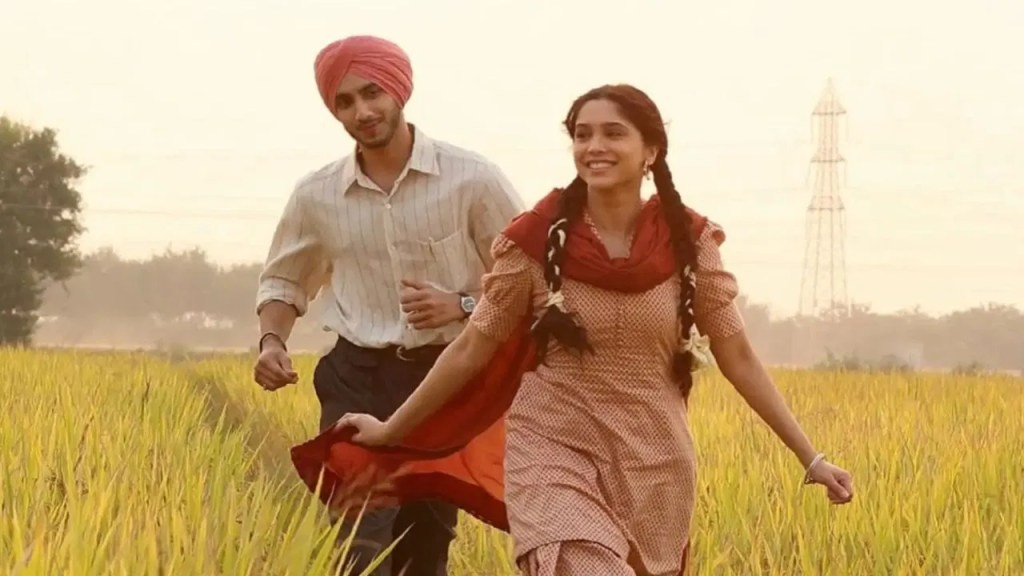
His story gets complicated with his advanced dementia. Keenu confabulates, creating stories to fill the gaps in his memory. Yet, the amazing part was the core aspects of his life story is intact in his soul only the superficial details shift. When he speaks of “Martians” attacking, he isn’t talking about outer space; he is describing the invaders who shattered his home. For him, the violence wasn’t about religion, it was about a forced alienation, the arrival of “aliens” who made him a stranger in a Sargodha where everyone had once lived harmoniously.
The film reveals, with devastating clarity, that while his brain faded, his connection to Sargodha and Jia only intensified. Dementia could not erase what was woven into his very being.
This journey toward closure becomes a mirror for his grandson, played by Diljit Dosanjh who has been struggling with his own modern-day commitment issues. Watching his grandfather’s agonizing need to keep a promise made decades ago to return and read his poetry to the woman he loved, the grandson realizes the shallowness of his own fears. But he also realised deep within him he too longs for a love as pure as his grand father. Imtiaz Ali’s movie struck a chord across generations and the movie is primarily getting promoted by word of mouth using social media.
Our modern life chases for the LCM or “lowest common multiplier” for happiness because it’s easy to manage. We look for the “happy movies” because they don’t demand anything from us. But Keenu’s story points us to the HCF . His dementia stripped away all the “multiples” the trivial details, the daily routines, the modern distractions and left him with the only factor that mattered: his love for Jia and Sargoda.
It leaves one sitting in the quiet darkness of the theatre while the end credits are playing on the screen , wondering what irreducible truth will remain of our own story when everything else is stripped away.

 The Soul Compass
in the age of GenAI infused articles and reviews, this write up comes up as a whiff of fresh air. Nice one.
LikeLike
Thank You!!!
LikeLike