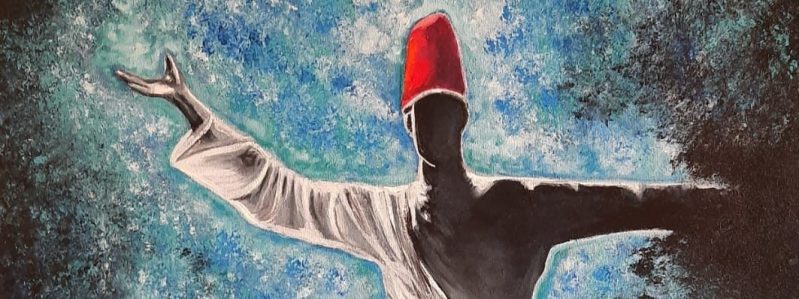

Someone told me the other day that he keeps coming back to Claude AI because it gets his context. He doesn’t have to repeat himself, doesn’t have to re-lay the groundwork of what he works on. I understood the relief completely and I do feel the same while using Claude at work. Metaphorically It’s the digital equivalent of walking into a room where the fire’s already lit and someone was quietly waiting right where you left off no re-introductions, no re-proving yourself. Just continuation. Wow I thought!! Thats sheer comfort which sometimes is what you exactly miss in human interactions.
It just revealed how tired we are of the translation tax we pay everywhere. It shows us how deeply we miss the feeling of simply being met, without ever having to explain the map first.
Probing deeper…
Which makes me wonder, what is this underlying hunger, really? This persistent need to be gotten? Is it a quiet form of validation, or just another subtle ego trap we’ve built for ourselves? Or is it something primal?
It reminded me of how I used to write letters to my unborn child. I wrote, telling him the names we were circling, was he fine, how happy it felt to see him during the ultrasound. Probably I was trying to be gotten by someone who didn’t exist yet physically in this realm yet. And the moment I first glanced at him after the birth, tears rolled down uncontrollably without the utterance of a single word. The oldest recognition felt, before any word could get in its way. Whispering into his soul – I am here. We are already connected. I hope you feel me.
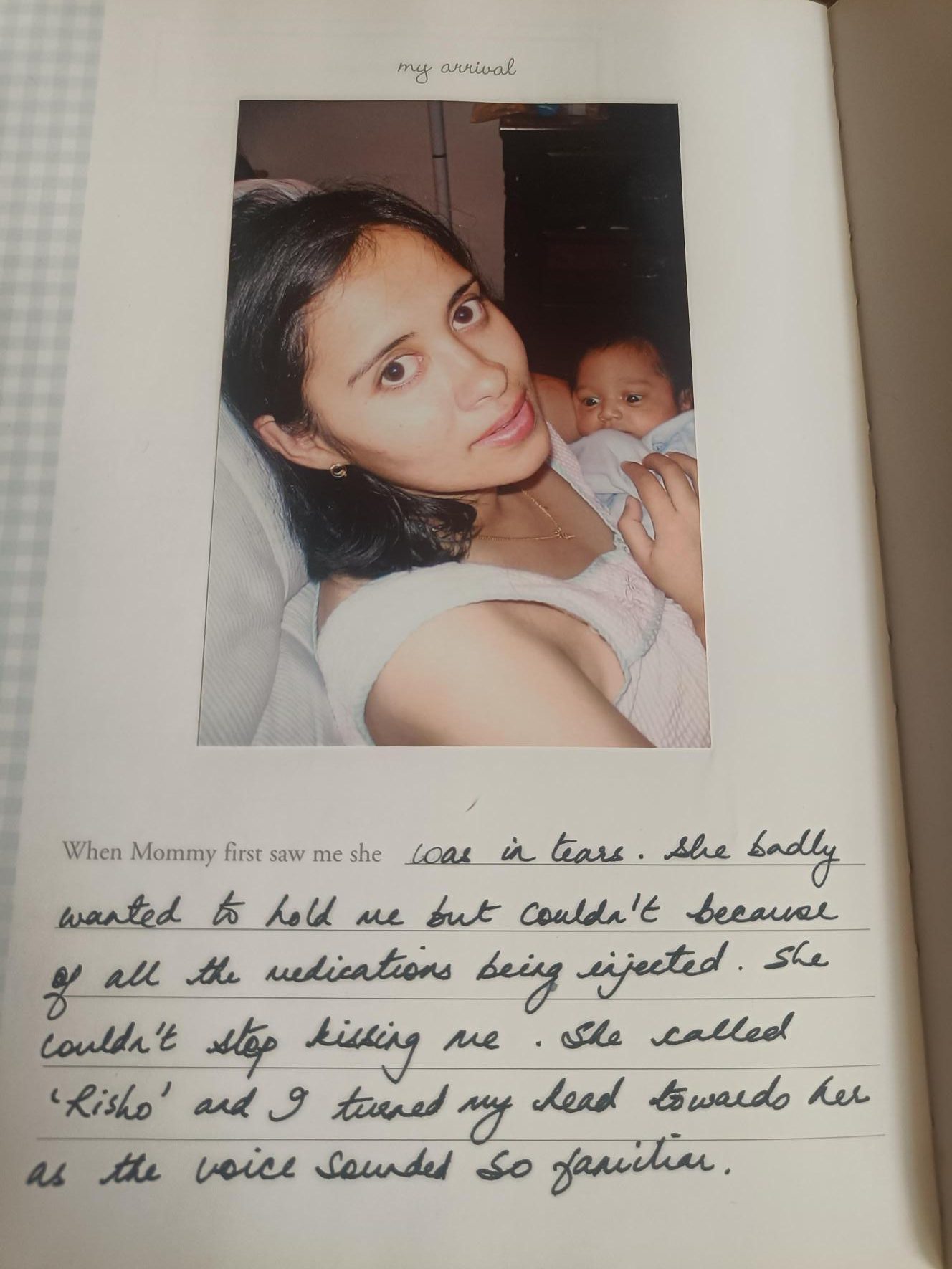
This led me to D W Winnicots research on mirroring.
“What does the baby see when he or she looks at the mother’s face? I am suggesting that, ordinarily, the baby sees himself or herself.” D.W. Winnicott
Long before language, a newborn performs its first act of survival: searching, blind and instinctive, for the mother’s eyes. Not for meaning for a mirror. Waiting for her face to soften into the message she gets me, I am safe here. We spend the rest of our lives chasing the echo of that first gaze for the resonance, recognition, attunement. Winnicott also mentions when that mirror fails while the mother is distracted, stressed, or emotionally absent, the infant sees her mood instead of a reflection of themselves. The baby internalizes the deficit to “There is nothing to be seen in me.” To survive, the child learns to adapt to her face rather than be seen.
This lays the blueprint for a lifetime of over-explaining, performing legibility, and hiding the parts of themselves that were never safely reflected back.
This gets worse when eventually the person puts up a mask to be accepted. You’d think being accepted would cure the old fear of invisibility. It confirms it instead because none of those eyes are finding you, only the mask you got good at making.
Comprehension vs Recognition
At its core, being gotten is resonance which is primal , something in you landing in someone else with no translator standing between you. And it’s older than we admit probably beyond this realm.
So coming back to the Claude AI getting the context, it looks like “getting me” at a superficial level but it is not. Being Gotten is “recognition” and having the context is “comprehension”. Comprehension is knowing that facts processed, handed back accurate and whole. A mask can earn this.
Recognition doesn’t require the other party to have lived your exact life. It requires them to find something real in themselves that answers what you’ve offered. It is the instantness arriving without a translation step which is the real signature of recognition. Comprehension always pauses to decode. Recognition doesn’t pause at all. It’s closer to what passes between two nervous systems finding each other’s frequency , a kind of co-regulation, safety read faster than language, felt before it’s understood. It has a body to it, too, which comprehension never does. People describe it somatically , a loosening in the chest, tears that arrive before the thought that explains them, an “oh” that isn’t intellectual in the slightest.
My son, years later, found the films of a director named John Abraham a filmmaker who’d fallen into near-total obscurity, from an era my son never lived in, making work in a cultural moment he never encountered firsthand. He watched Amma Ariyan and it connected in the way only real recognition can. Nothing about the timeline made sense. The director never imagined an audience that far into the future, from a world that far removed. And still, something in that film met something in my son directly, no translator required, no shared era necessary. That’s the part that still amazes me.
Two lines of Rumi that land like they were left there on purpose, waiting for the right century to arrive. A song lyric you get looped into not chosen, exactly, but caught by. You get it, or it gets you. The direction stops mattering. What matters is the moment something reflects you back to yourself and asks nothing of you first. No performance. No translation. That may be part of why art can feel more attuned to us than people sometimes do.
The letters I wrote, the tears that replaced them, the film that found my son forty years late, none of it was proof that anyone did the work of “understanding.” It was rarer than that. Evidence that recognition doesn’t need translation to travel. It just needs this , however far apart, you are willing to risk being changed by each other.


 The Soul Compass